
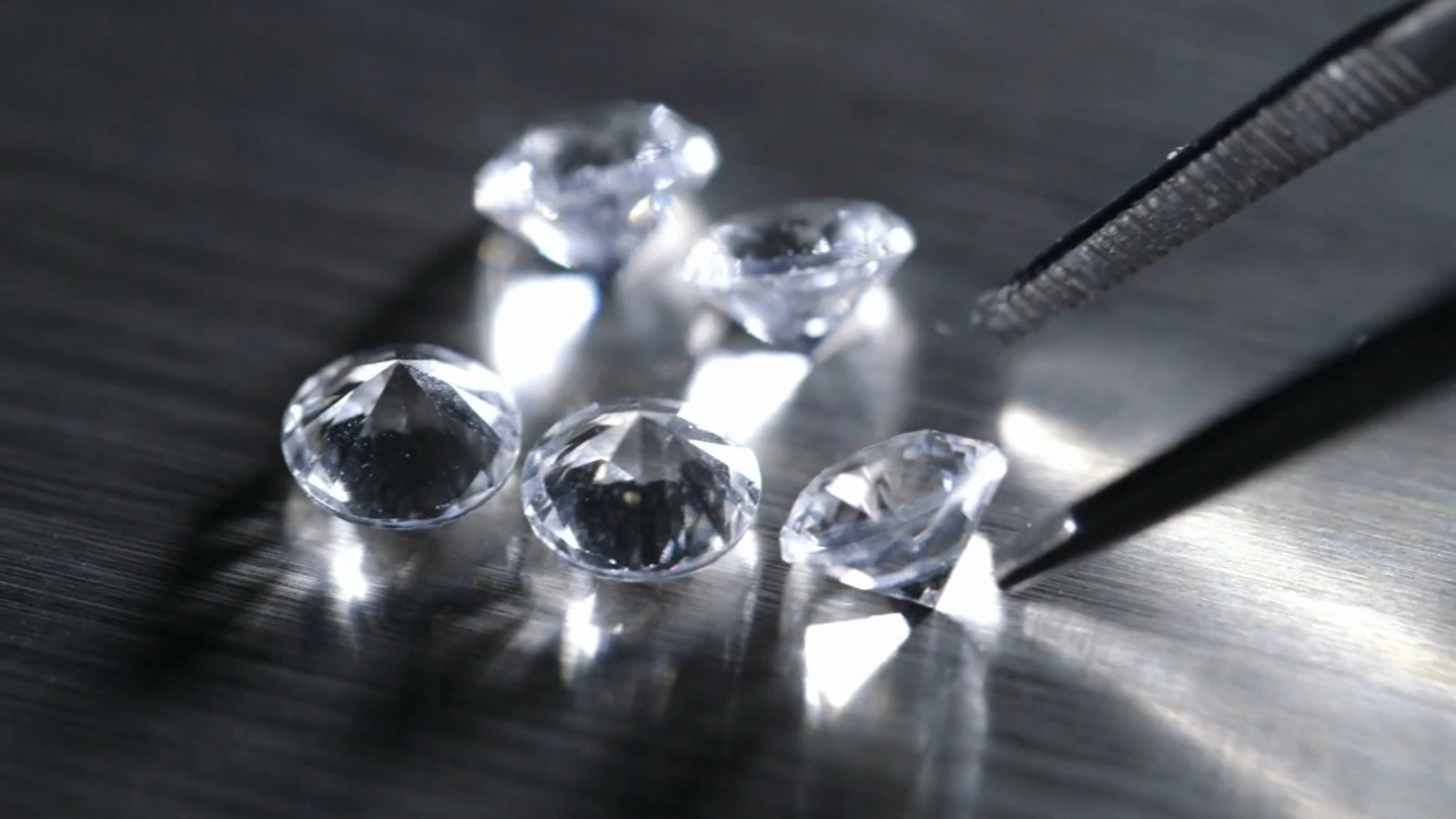
What Is a Diamond?A diamond is pure carbon arranged in a crystal lattice — one of the hardest natural substances on Earth, rated 10 on the Mohs scale. That crystalline structure is what gives diamonds their extraordinary hardness, brilliance, and fire. For centuries, diamonds formed deep inside the Earth under intense heat and pressure before being carried upward through volcanic pipes. Today, the same crystal structure can be grown above ground in a controlled laboratory environment using the same carbon atoms, the same physics, and the same result: a real diamond. Lab-grown diamonds are not simulants. They are not cubic zirconia or moissanite — those are entirely different minerals. A lab-grown diamond is chemically, optically, and physically identical to a mined diamond. The only difference is where it came from. |
 |
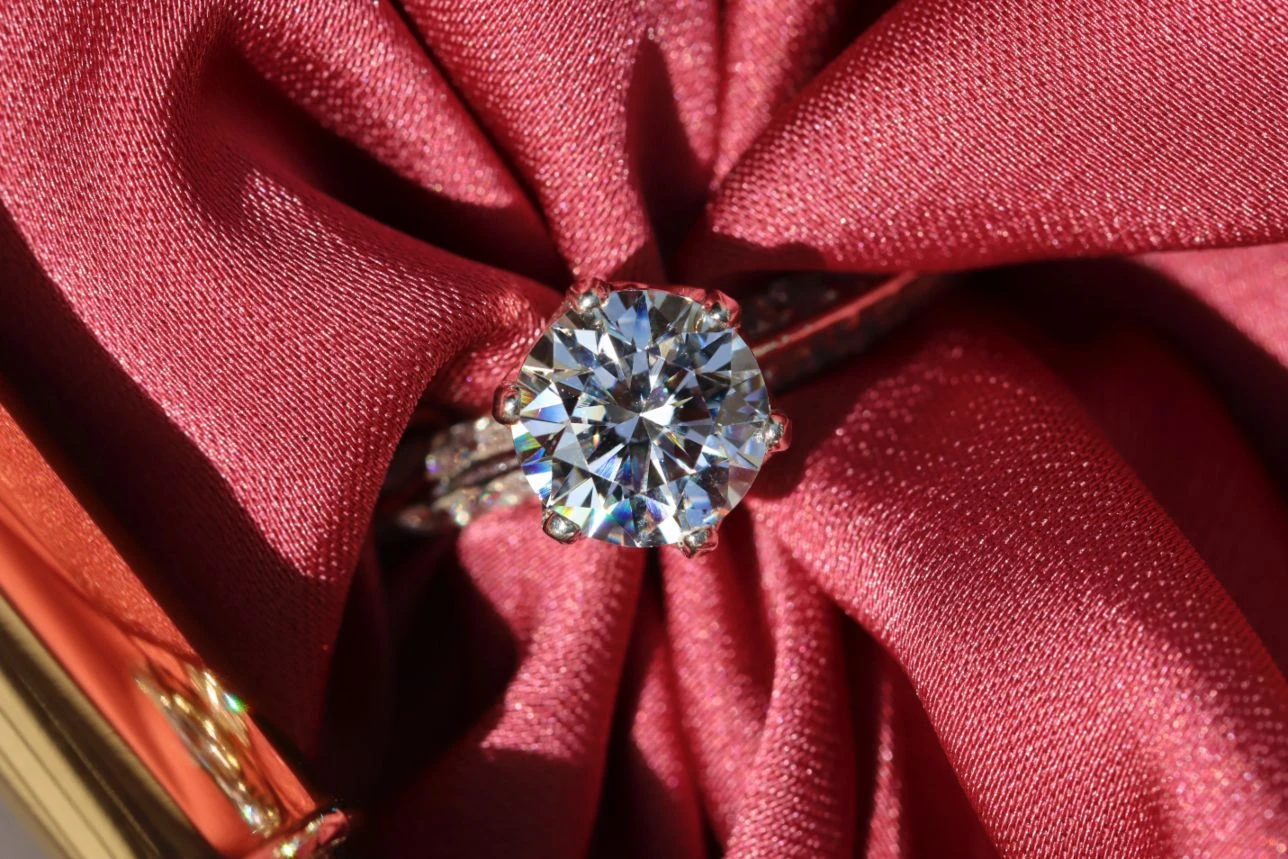 |
The 4Cs of Diamond QualityEvery diamond — lab-grown or mined — is evaluated by four universal quality factors, collectively known as the 4Cs. Developed by the Gemological Institute of America (GIA), this framework gives buyers a consistent language for comparing stones. Cut determines how a diamond interacts with light. An ideal cut returns light straight back to your eye, producing brilliance, fire, and scintillation. It is widely considered the most important of the 4Cs. Color is graded D (colorless) to Z (light yellow or brown). Colorless grades (D–F) are the rarest and most valuable. Near-colorless (G–I) offer excellent value with minimal visible difference to the naked eye. Clarity measures the presence of internal inclusions or surface blemishes. VS1–VS2 and SI1 grades are popular choices — inclusions exist but are invisible without magnification. Carat refers to a diamond’s weight, not its size. One carat equals 0.2 grams. Carat weight affects price significantly, but the visual size also depends on cut and shape. |
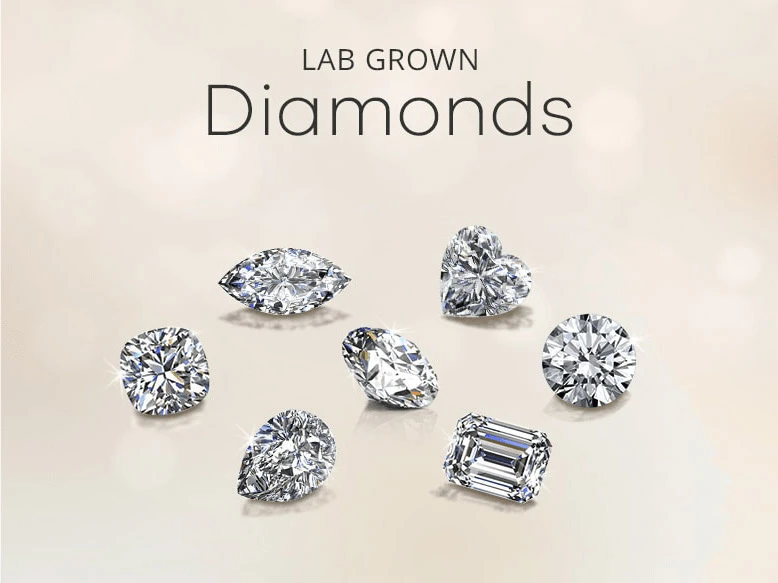
Diamond Shapes ExplainedShape refers to the outline of the diamond when viewed from above. It is separate from cut quality — two round diamonds can have the same shape but very different cut grades. Each shape carries a distinct personality and look. Round Brilliant is the most popular shape, engineered specifically for maximum light return. It accounts for the majority of diamond sales worldwide and has the broadest resale familiarity. Radiant and Cushion cuts combine the brilliance of a round with a square or rectangular outline — popular for their warmth and vintage appeal. Emerald cut uses step facets to produce a hall-of-mirrors effect that emphasizes clarity over sparkle. Princess, Oval, Pear, Marquise, and Asscher each offer unique proportions and style signatures. Elongated shapes like oval and marquise can make the finger appear longer. The right shape is ultimately a matter of personal preference and lifestyle fit. |
 |
 |
How Lab-Grown Diamonds Are MadeEX3 grows its diamonds using Chemical Vapor Deposition (CVD) — a process in which a diamond seed crystal is placed inside our proprietary CVD chamber, the OB1X, and exposed to a carbon-rich gas mixture. Under carefully controlled heat and pressure, carbon atoms precipitate onto the seed crystal layer by layer — atom by atom — building a diamond from the inside out. The process mirrors what happens miles underground, compressed from millions of years into weeks. About 15% of our diamonds fail to meet quality standards during growth. When that happens, the carbon is reclaimed and the process begins again. No stone leaves the chamber unless it meets our specifications. After growth, each diamond is hand-faceted by expert cutters and hand-set in our designer settings — cast and finished in Illinois. Every stone is individually tested and laser-inscribed by IGI before it ships. |
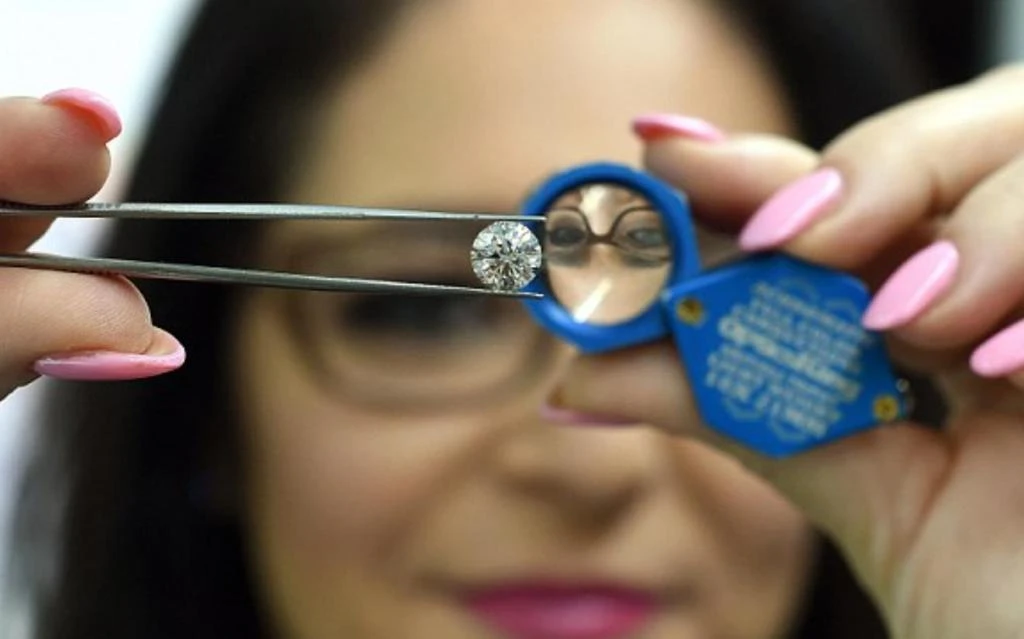
Why Diamond Certification MattersA diamond grading report is an independent, third-party document that verifies a diamond’s 4Cs and confirms its authenticity. It is not an appraisal — it does not assign a dollar value. Its purpose is to give buyers objective, verifiable information about exactly what they are purchasing. Every EX3 Diamond is certified by the International Gemological Institute (IGI) — one of the world’s leading diamond grading laboratories. IGI grading reports are issued after rigorous, multi-step evaluation by trained gemologists using standardized laboratory instruments. Each stone also receives a unique laser inscription on the girdle — a microscopic ID number that matches the certificate. This lets any qualified gemologist independently verify your diamond’s identity, providing permanent, tamper-proof proof of what you own. For a deeper look at how certification works and what the grading report covers, see our Diamond Certification Guide. |
 |

