
How Much Should an Engagement Ring Cost?
Sep 18th 2026
You have probably heard the old rule: spend two or three months of salary on an engagement ring. It is not a financial principle. It is a marketing line a diamond company invented decades ago to sell bigger stones. There is no rule that fits every budget, every couple, or every ring.
What is actually useful is understanding what drives the price up or down, so you can decide where to spend and where to save.
Carat is not the only thing you are paying for
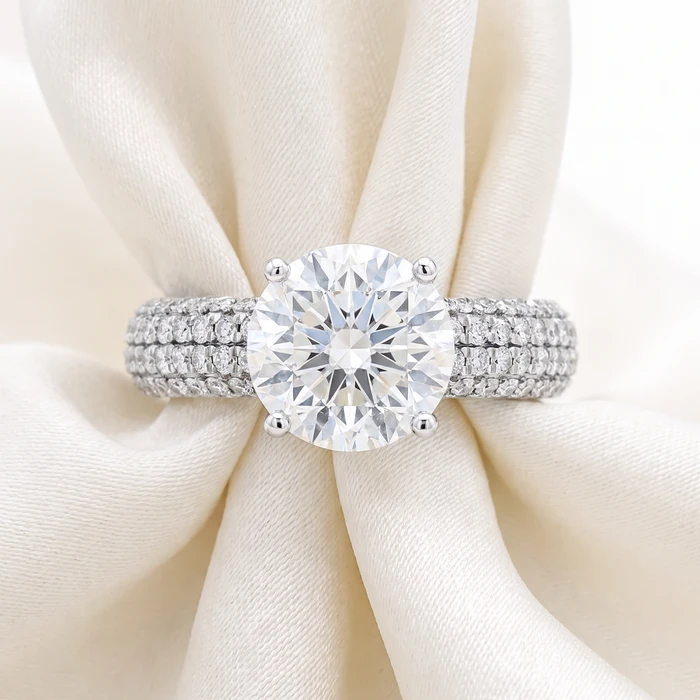
Carat weight gets the attention, but it is just one factor, and it does not scale in a straight line. A 2-carat diamond typically costs far more than double a 1-carat diamond of similar quality, because larger rough stones are rarer to begin with. If budget matters more to you than hitting a round carat number, a setting that makes a smaller center stone look bigger, such as a halo or pavé along the band, can close that gap without changing what you are actually spending on.
Cut, color, and clarity move the price more than people expect
Two diamonds can be the same carat weight and look completely different in price:
- Cut determines how much a diamond sparkles. A well-cut stone reflects light efficiently and can look larger and brighter than a poorly cut diamond of the same size. This is usually worth prioritizing over the other three Cs.
- Color is graded on how colorless a diamond is. Near-colorless grades often look identical to an untrained eye but cost meaningfully less than a top color grade.
- Clarity measures internal and surface characteristics. Many inclusions are invisible without magnification, so a slightly lower clarity grade can be a smart place to save.
Lab-grown vs. natural is the biggest lever in the room
This is where most of the price difference lives. A lab-grown diamond has the same crystal structure, hardness, and brilliance as one pulled from the earth. The only difference is where it formed. EX3 Diamond creates each stone in a controlled lab environment using equipment that recreates the heat and pressure found deep in the earth, then cuts and finishes it in-house. Because that process is faster and skips the mining and distribution chain that natural diamonds go through, lab-grown stones typically cost less per carat than natural diamonds of comparable quality, without being a different, lesser material. Moissanite, cubic zirconia, and other simulants are a separate category entirely. A lab-grown diamond is still a real diamond, chemically and physically.
Metal and setting style
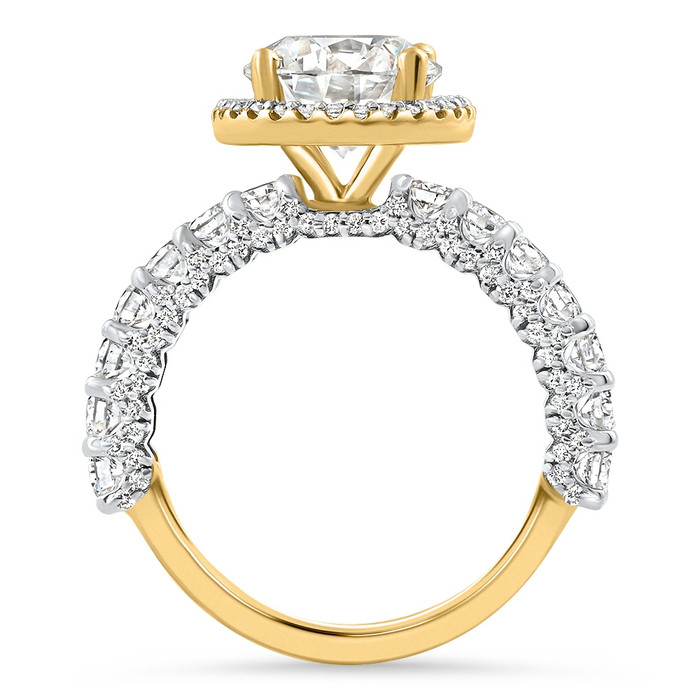
Platinum costs more than white gold, which costs more than yellow or rose gold, mostly due to the raw material itself. Intricate settings with more hand-finishing, such as pavé bands, filigree, and vintage-inspired detail, also add labor cost on top of the stone.
Certification protects what you are paying for
An independent lab report, such as the one EX3 works with from IGI, grades and laser-inscribes each stone, verifying the 4Cs you are being charged for. Certification is not what makes a diamond expensive. It is what makes sure you are not overpaying for a diamond that does not match its listing.
Why the same-looking ring costs different amounts at different retailers
A lot of the price gap between retailers has nothing to do with the diamond. Traditional jewelry retail runs through several markups, including the cutter, wholesaler, distributor, and store, before a ring reaches a case. EX3 Diamond manufactures in the United States and sells directly, which cuts out several of those middlemen. Combined with using lab-grown diamonds and recycled metals, that is the main reason a comparable ring can cost noticeably less without a difference in what you are actually getting: a certified, 100% real diamond.
How to get more ring for your budget
A few practical moves, in order of impact:
- Prioritize cut over carat. A smaller, excellently cut diamond will out-sparkle a larger, poorly cut one.
- Consider lab-grown. Same crystal structure and brilliance as a natural diamond, typically at a noticeably lower cost per carat, so more of your budget goes to size and quality instead of origin.
- Choose a setting that maximizes perceived size. Halo and pavé styles add visual weight around the center stone.
- Buy direct where you can. Fewer markups between the manufacturer and you generally means a lower price for the same specs.
- Ask about financing. If you would rather spread the cost out than delay the proposal, EX3 offers financing. Details are on the FAQ page along with return and exchange policies, so you know exactly what you are covered by before you buy. </ul
Set a budget that actually makes sense for you
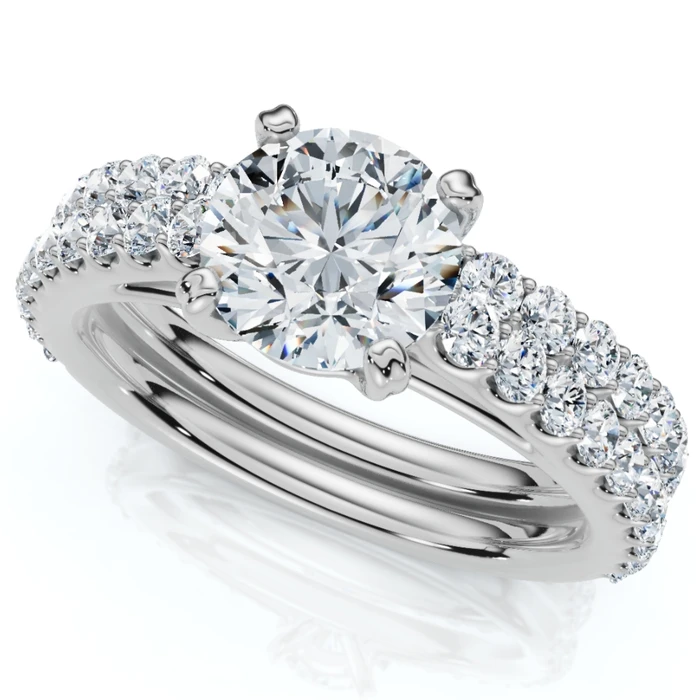
Instead of a formula, start from what you can comfortably spend without financial strain, then decide which of the factors above matter most to you: a bigger stone, a higher color grade, a specific metal, or a particular setting. You do not need to max out every category at once. A well-cut, certified lab-grown diamond in a thoughtfully chosen setting can look every bit as striking as a ring that costs several times more.
If you want to see what that actually looks like across different budgets, browse the engagement ring collection at EX3 Diamond and filter by shape, metal, or price to compare real options side by side.
- >

