
1 Carat vs. 2 Carat Lab-Grown Diamond Engagement Rings: Size, Appearance & Price Comparison
Posted by EX3 Diamond on Nov 11th 2026
Choosing between a 1 carat and a 2 carat lab-grown diamond is one of the biggest decisions in designing an engagement ring. The difference isn't just about size on paper — it changes how the ring looks on the hand, what it costs, and which settings work best. Here's a straightforward, practical comparison to help you decide.
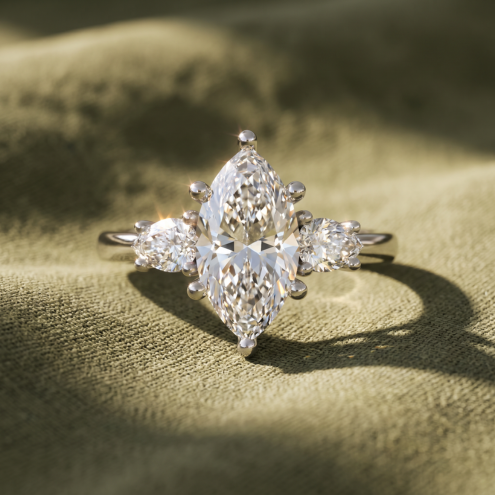
How Much Bigger Does a 2 Carat Diamond Actually Look?
Carat weight measures a diamond's mass, not its visible diameter, so the jump from 1 to 2 carats doesn't simply double the size you see from above. A well-cut round 1 carat diamond measures roughly 6.5mm across, while a round 2 carat diamond measures roughly 8.1-8.2mm — about 25% wider, but noticeably more substantial when it catches the light. Elongated shapes like oval, pear, and marquise tend to look larger per carat than round or cushion cuts, so shape choice matters as much as carat weight if your priority is visual size.
Shape Changes the Math
If you want a 2 carat diamond to look as large as possible, an elongated shape stretches more surface area across the finger. If you want a 1 carat diamond to punch above its weight, a halo setting — a ring of smaller diamonds surrounding the center stone — is the classic way to add visual size without the carat-weight price jump.
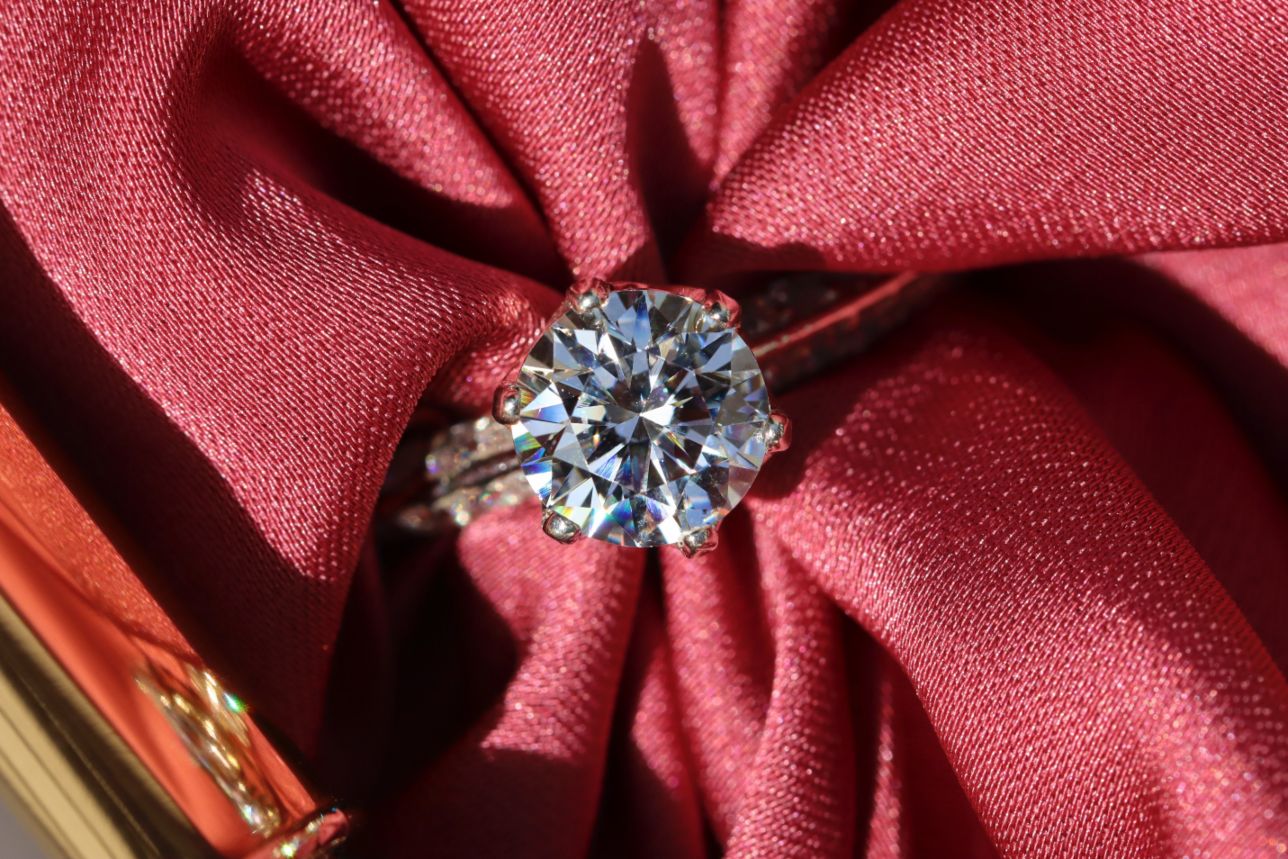
Why 2 Carat Diamonds Cost More Than Double
Diamond pricing isn't linear with carat weight. Larger rough diamonds are rarer to begin with, and cutting a 2 carat stone to ideal proportions wastes more material than cutting a 1 carat stone, which pushes the price per carat up as size increases. That's true even for lab-grown diamonds, though lab-grown pricing per carat is substantially lower across the board than mined diamonds at equivalent color, cut, and clarity. In practice, expect a 2 carat lab-grown diamond to cost meaningfully more than twice a comparable 1 carat stone — not because the lab-grown process gets more expensive at scale, but because of how the grading and cutting economics work at higher carat weights.
Which Settings Work Best at Each Carat Weight
A 1 carat diamond pairs naturally with a classic solitaire or a thin pave band — settings that let a smaller stone read as elegant rather than sparse. A 2 carat diamond can carry more setting detail: a three-stone design, a wider pave band, or a vintage-inspired halo all read proportionally at this size without overwhelming the stone itself. If you're building your ring from scratch, it's worth trying the diamond in more than one setting style before deciding, since the same stone can look completely different depending on the metal width and prong style around it.
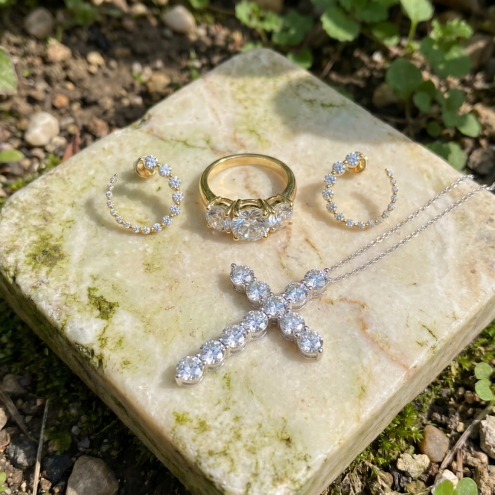
Use the Ring Size Guide Before You Decide
One detail buyers often overlook: a larger diamond sits higher and wider on the finger, which can change how a ring fits and feels day to day, especially for smaller hands or active lifestyles. Before you commit to a carat weight, use our Ring Size Guide to measure accurately at home and understand how different band widths and stone sizes will sit on your specific finger size. It only takes a few minutes and avoids a resizing headache later.
The Bottom Line
There's no universally "better" choice between 1 carat and 2 carat — it comes down to budget, hand size, and the look you want. A 1 carat diamond in a halo or pave setting can look remarkably close to a 2 carat solitaire for a fraction of the cost, while a 2 carat stone in a simple setting makes a confident, unmistakable statement. Every diamond in our collection is IGI-certified and lab-grown, so you're comparing apples to apples on quality regardless of which size you choose.
Frequently Asked Questions
Is a 1 carat or 2 carat lab-grown diamond better for an engagement ring?
Neither is universally better — a 1 carat diamond in a halo or pave setting offers elegant sparkle at a lower price, while a 2 carat diamond makes a bolder, more substantial statement. The right choice depends on your budget and the look you want.
How much more does a 2 carat lab-grown diamond cost than a 1 carat?
Typically well over double, since larger individual diamonds cost more per carat than smaller ones, even though lab-grown pricing is substantially lower than mined diamonds at every size.
Does a halo setting make a 1 carat diamond look like a 2 carat diamond?
A halo setting adds visual size by surrounding the center stone with smaller diamonds, which can make a 1 carat diamond read as noticeably larger without the carat-weight price jump of an actual 2 carat stone.
Are lab-grown diamonds certified the same way as mined diamonds?
Yes. Every EX3 diamond is IGI-certified, with documentation of carat, color, clarity, and cut, regardless of whether it's lab-grown or mined.

